The challenge
H-E-B wanted ads in search to feel native rather than exploitative. Customers inherently distrust ads, but H-E-B needed the revenue. The question: could ads enhance search instead of interrupting it?
The approach
I designed and ran a usability testing plan of 27 sessions across two tracks:
- Unmoderated (18 participants): three levels of search specificity (low, medium, high), split evenly across mobile and desktop.
- Moderated (9 participants): deep dives on mobile across three template variations, probing intent, friction and how people perceived the ads in real time.
Key findings
Templates should match intent
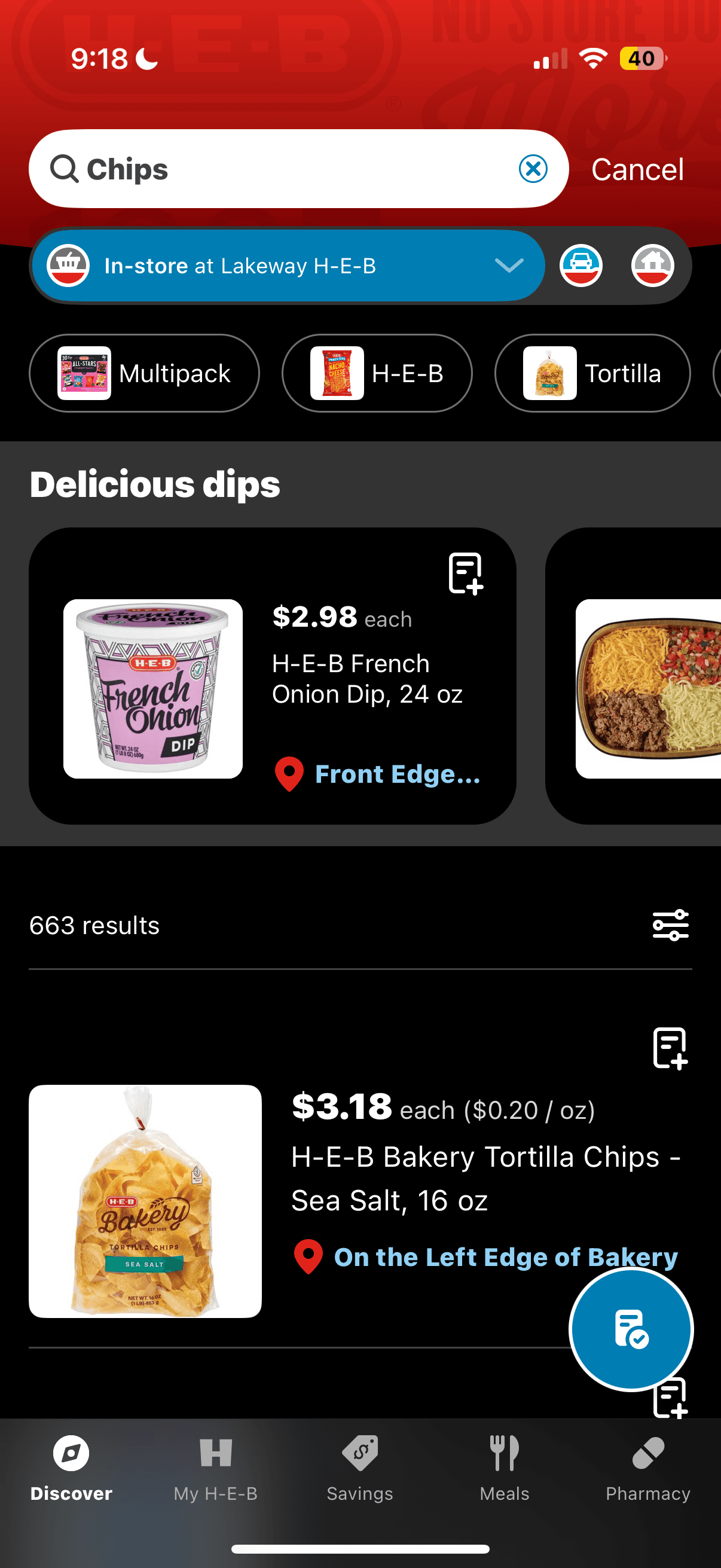
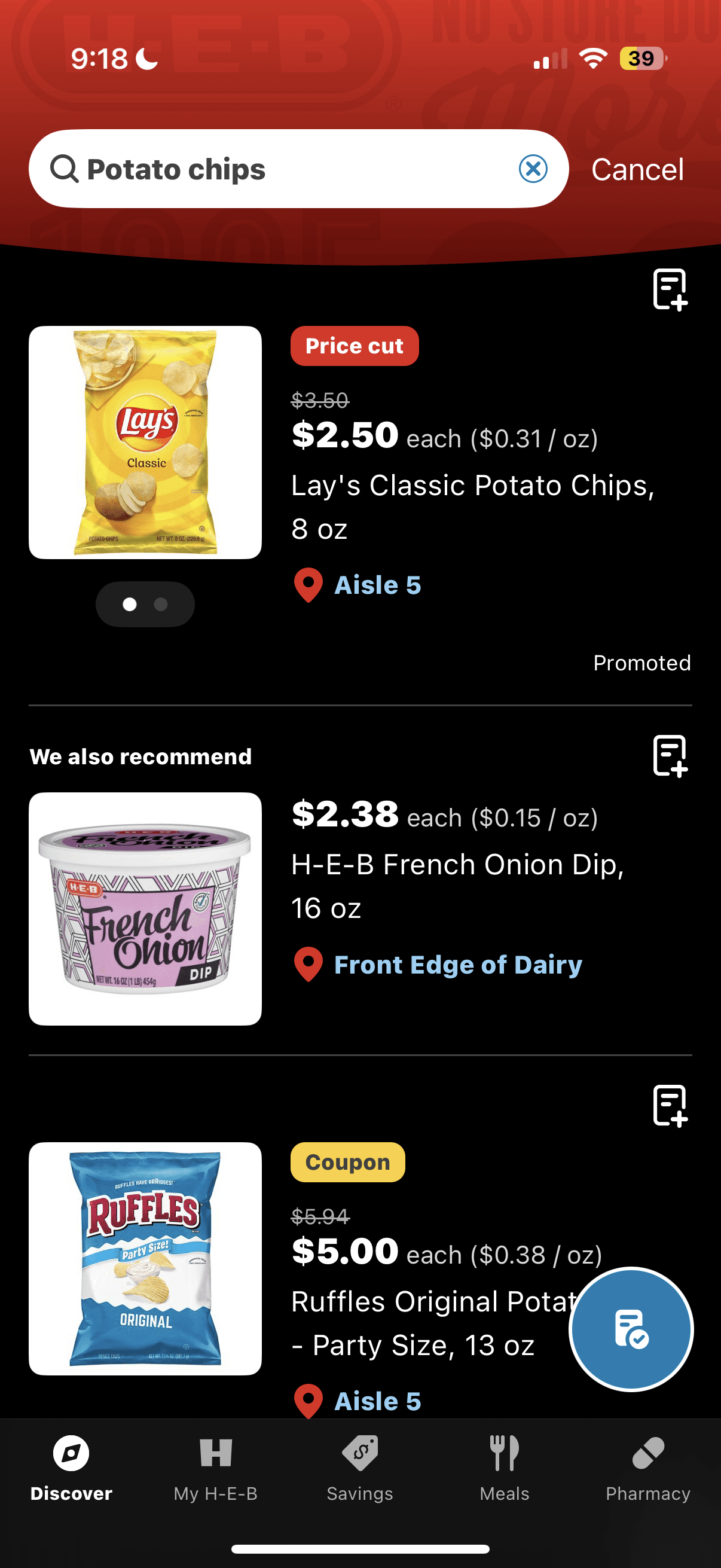
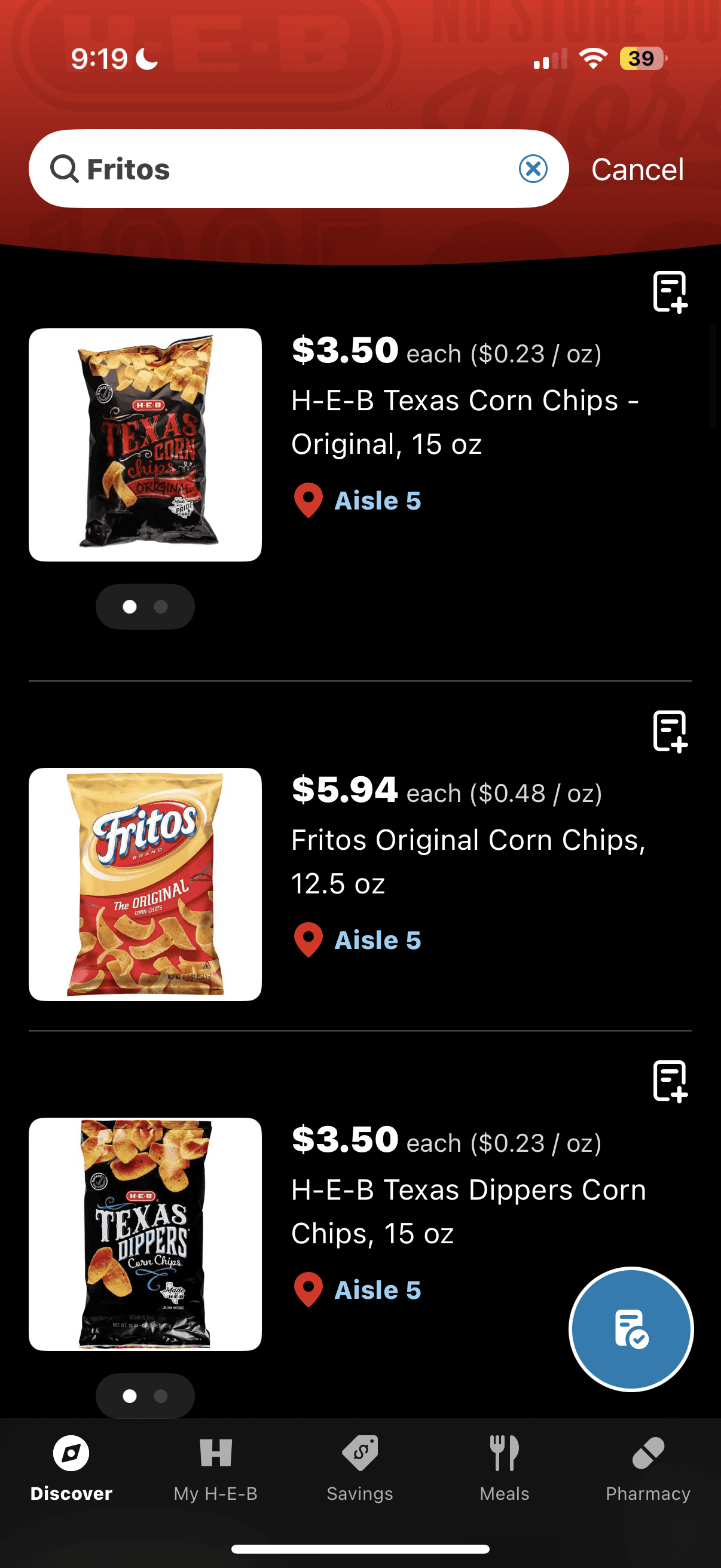
Shoppers responded well when the results layout adapted to how specific their search was. A broad search like “cereal” needs a different hierarchy than “Honey Nut Cheerios.” Adapting signaled intelligence and reduced cognitive load.
Ads aren't the problem; placement is
Participants started out negative on ads but accepted them when two conditions held: the ad fit the search intent, and its placement didn't interrupt natural scrolling.
Recommendations & results
I recommended ad placements aligned with average scroll depth, and formats using content relevant to the query and past purchases, moving ads from interruption to discovery.
- Low-specificity searches: 12% cross-sell lift.
- Medium-specificity searches: 8% cross-sell lift.
- High-specificity searches: minimal impact, as expected. Those shoppers already know what they want.
- No drop in search satisfaction scores.